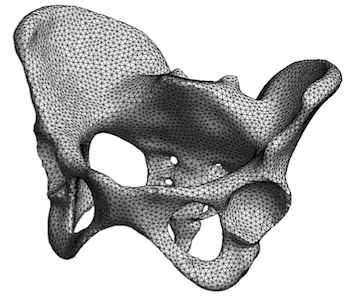
Gmsh is an open source 3D finite element mesh generator with a built-in CAD
engine and post-processor. Its design goal is to provide a fast, light and
user-friendly meshing tool with parametric input and flexible visualization
capabilities. Gmsh is built
around four modules
(geometry, mesh, solver and post-processing), which can be controlled with
the graphical user
interface, from
the command
line, using text files written in Gmsh's
own scripting
language (.geo files), or through the C++, C, Python, Julia and
Fortran application
programming interface.
See this general presentation for a high-level overview of Gmsh and the reference manual for the complete documentation, which includes the Gmsh tutorial. The source code repository contains the tutorial source files as well as many other examples.
Gmsh is distributed under the terms of the GNU General Public License (GPL):
pip install
            --upgrade gmsh
'
Make sure to read the tutorial and the FAQ before sending questions or bug reports.
git clone
          https://gitlab.onelab.info/gmsh/gmsh.git
'
pip install -i https://gmsh.info/python-packages-dev
        --force-reinstall --no-cache-dir gmsh
' (on Linux systems without
X windows, use python-packages-dev-nox instead of
python-packages-dev)
If you use Gmsh please cite the following reference in your work (books, articles, reports, etc.): C. Geuzaine and J.-F. Remacle. Gmsh: a three-dimensional finite element mesh generator with built-in pre- and post-processing facilities. International Journal for Numerical Methods in Engineering 79(11), pp. 1309-1331, 2009. You can also cite additional references for specific features and algorithms.
Please report all issues
on https://gitlab.onelab.info/gmsh/gmsh/issues.
Gmsh is copyright (C) 1997-2022 by C. Geuzaine and J.-F. Remacle (see the CREDITS file for more information) and is distributed under the terms of the GNU General Public License (GPL) (version 2 or later, with an exception to allow for easier linking with external libraries).
In short, this means that everyone is free to use Gmsh and to redistribute it on a free basis. Gmsh is not in the public domain; it is copyrighted and there are restrictions on its distribution (see the license and the related frequently asked questions). For example, you cannot integrate this version of Gmsh (in full or in parts) in any closed-source software you plan to distribute (commercially or not). If you want to integrate parts of Gmsh into a closed-source software, or want to sell a modified closed-source version of Gmsh, you will need to obtain a commercial license: please contact us for details.
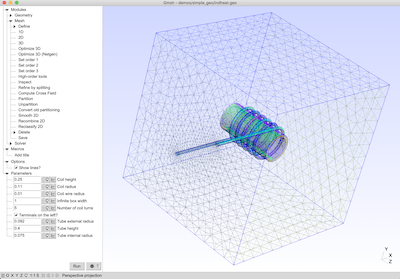
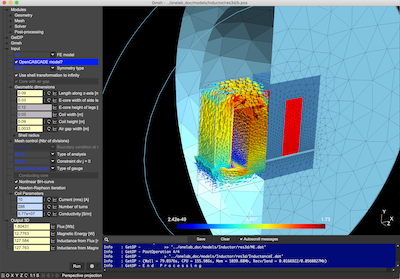
These are two screenshots of the Gmsh user interface, with either the light or dark user interface theme. See the ONELAB web site for more.
The term "Backroom" often refers to a hidden or secluded area, sometimes associated with illicit activities. When combined with "casting couch," it evokes a scenario that might suggest exploitation or abuse within the entertainment industry. The "casting couch" is a longstanding metaphor for the exploitation of aspiring actors and actresses by those in power, typically implying a form of quid pro quo where sexual favors are demanded in exchange for career advancement.
Given the components of your query, I will instead focus on the general issue of exploitation in the entertainment industry and the impact it has on individuals and society. The entertainment industry, encompassing film, television, and music, has long been scrutinized for its treatment of aspiring artists. One of the most enduring symbols of this issue is the "casting couch," a euphemism for the coercion or manipulation of newcomers into sexual situations in exchange for career advancement. This practice is not only morally reprehensible but also illegal in many jurisdictions. Historical Context Historically, the casting couch phenomenon has been linked to the early days of Hollywood, where power imbalances were stark, and regulation was minimal. Over the decades, as awareness of these abuses has grown, so too has the scrutiny and legal framework designed to protect individuals. Impact on Individuals The impact of exploitation on individuals can be profound, leading to psychological trauma, including anxiety, depression, and post-traumatic stress disorder (PTSD). Victims may also face significant barriers to reporting these crimes, fearing retaliation, damage to their reputation, or disbelief. Societal Impact On a societal level, exploitation within the entertainment industry perpetuates a culture of silence and complacency. It discourages talented individuals from pursuing their dreams due to fear of abuse. Furthermore, it undermines the integrity of the industry, casting a shadow over legitimate professionals and their achievements. Legal and Ethical Reforms In response to these issues, there have been significant legal and ethical reforms within the entertainment industry. The introduction of more stringent policies, anonymous reporting systems, and a general shift towards accountability have been steps in the right direction. Movements such as #MeToo have amplified victims' voices, leading to the downfall of many perpetrators who had previously operated with impunity. Conclusion The issue of exploitation in the entertainment industry is complex and deeply ingrained. However, through continued vigilance, education, and legal action, there is hope for a future where aspiring artists can pursue their careers free from abuse and exploitation. The phrase you provided may refer to a specific incident or a general concern, but it underscores the need for ongoing dialogue and reform within the industry. backroom casting couch mira huge tits painf cracked
The words "painf cracked" suggest a violent or distressing scenario. The term "Backroom" often refers to a hidden
The phrase you've provided seems to reference a specific and potentially disturbing topic. However, I'll approach this with sensitivity and provide information that is helpful and informative. Given the components of your query, I will
The inclusion of "mira huge tits" could imply a specific individual or character being referenced, though without further context, it's challenging to provide a detailed explanation.