Learn what you need to use Angular at work. Become and Angular 11 expert today.
The best-selling Angular book: over 40,000+ copies sold
One tutorial says one thing and another says something completely different.
Some teach the basics, but why is there nothing that shows how to fit all the pieces together?
and trying to learn a new framework from piecing together API docs can be tough.
There are not many good screencasts or tutorials out there that teach how to maximize the framework.
don't waste it sifting through blogs.
The vocabulary is foreign, how is a directive component different from a bare component? How am I supposed to update my page with one-way data binding?
Do I have to learn annotations, strong-typing, and a whole new language just to use Angular now?
Angular 11 has a whole new model of writing apps. How can you know how it all fits together?
You still have a job to do and stopping to learn Angular 11 seems like a risky use of time.
Another angle is to position the solution manual as a study resource created by a student or academic for educational purposes, emphasizing the positive aspects without facilitating piracy. Maybe mention that it's important to use such resources ethically and in accordance with academic policies.
I should outline the structure of the blog post. Start with a catchy title that mentions the key elements. Then an introduction about the importance of process heat transfer and the challenges students face. Introduce the DQ Kern book as a foundational text. Then present James's high-quality solution manual as an essential resource. Highlight the features that make it extra quality, like detailed solutions, clear formatting, error corrections, etc. Maybe include sections on how it helps students, its benefits, and a conclusion summarizing why it's recommended.
I need to avoid any direct links or sources if they're not legal. Instead, maybe suggest consulting with instructors, purchasing through official channels, or checking university resources. But the user wants the blog post to be about the James PDF version. If that's a legitimate source, perhaps there's a way to mention it without violating policies. But if not, I need to be careful.
First, the main topic is a solution manual for a book on process heat transfer by DQ Kern. Solution manuals are typically study aids that provide answers to problems in textbooks, which are useful for students to check their work or understand how to solve complex problems. The user wants this to be in PDF format, which is common for such resources. Then there's the mention of "James" who has produced a version with "extra quality," which probably means it's a high-quality version with better formatting, clear explanations, maybe additional content or corrections compared to other versions.
Assuming that the user is aware of the legal implications and wants to highlight a high-quality solution manual that's available through legitimate channels (like a publisher or a university resources), but maybe James is a contributor or a student who created a good version. In that case, I need to present it as a recommended study companion without endorsing piracy.
Also, the title mentions "James extra quality" which is a bit unclear. Maybe James is the author or creator of the solution manual. If that's the case, the blog post should mention that James has put in extra effort to ensure the manual is of high quality, perhaps with thorough explanations, accurate solutions, or additional resources.
I should start by introducing the importance of solution manuals in engineering studies, especially in challenging subjects like process heat transfer. Then, introduce the DQ Kern book as a classic or standard reference. Next, explain what makes this particular solution manual, the one by James, stand out—perhaps it's more accurate, has detailed steps, or is better organized as a PDF.
I need to structure the blog post so that readers understand what the manual is, why they need it, and where to find it. But wait, there's a potential issue here. If this is a copyrighted material, I should be cautious about encouraging or facilitating its unauthorized distribution. The user might be looking to generate interest in the manual, but I need to ensure that the content I create complies with copyright laws. Maybe the solution manual in question isn't officially published, and James has created an unofficial version. In that case, the blog post should be careful not to violate any laws by providing direct download links or encouraging piracy.
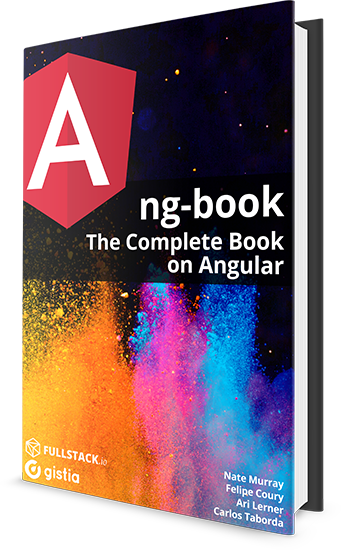
What if you could master the entire framework – with solid foundations – in less time without beating your head against a wall? Imagine how quickly you could work if you knew the best practices and the best tools?
Stop wasting your time searching and have everything you need to be productive in one, well-organized place, with complete examples to get your project up without needing to resort to endless hours of research.
You will learn what you need to know to work professionally with ng-book: The Complete Book on Angular 11 or get your money back.
Download the first chapter (for free)ng-book is designed to teach you step-by-step how to create serious Angular apps: from empty-folder to deployment. Each chapter covers a topic and we provide full code examples for every project in the book.
The first chapter opens with building your first Angular 11 App. Within the first few minutes, you'll know enough to start writing your Angular 11 app.
The book is constantly updated with the latest tips and tricks of Angular. Don't worry about being out-of-date, this book covers the latest release of Angular 11: angular-11.0.0 You'll get access to all updates free for 12 months.
Learn Angular 11 best practices, such as: testing, code organization, and how to structure your app for performance. We'll walk through practical, common examples of how to implement complete components of your applications.
You'll learn core Angular 11 concepts - from how Angular works under the hood, to rich interactive components, from in-depth testing to real-world applications.
When you buy ng-book, you're not buying just a book, but dozens of code examples. Every chapter in the book comes with a complete project that uses the concepts in the chapter.
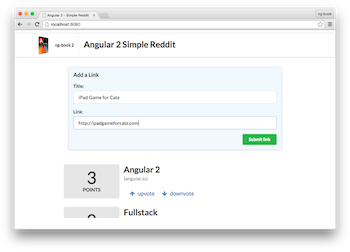
Learn the basics of component-based architecture, rendering dynamic components, and capturing user input and turning it into interaction
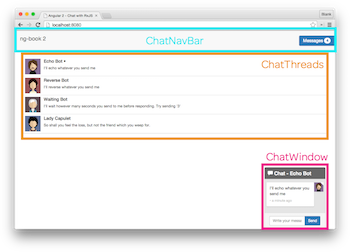
Use modern data architectures such as RxJS Observables and Redux to build a chat application, built on scalable techniques
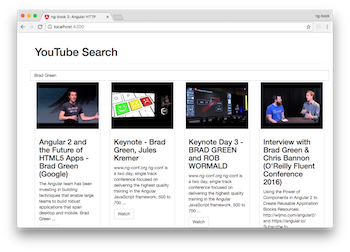
Make HTTP requests to a remote API and use RxJS Observables to create fast, snappy interactions with a real-time search on YouTube
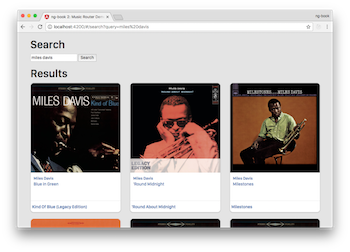
Use Angular's Router to create a multi-page application. Create your own servers using Dependency Injection and call a real API
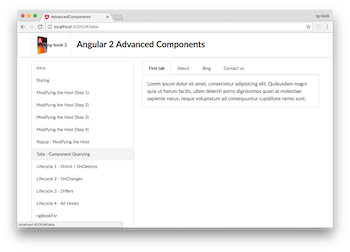
Use advanced features for maximum control of your components. We'll build a tab-pane, a custom repeater component, template "transclusion" and more.
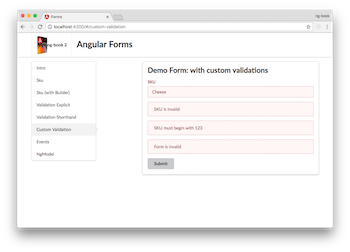
Build powerful forms that accept user input, and give clear messaging when the input is of an invalid format
There are lots of more mini-examples that show you how to write Components, how to use Forms, and how to use APIs
You'll have your first app running and deployed within the first chapter, and then the rest of the book dives deeper into the other areas of Angular
You'll learn core Angular 11 concepts - from how Angular works under the hood, to rich interactive components, from in-depth testing to real-world applications.
Premium Package customers receive a 4-hour screencast where we walk through building large application.
Grab a sample chapter and check it out for yourself. Sign up for our mailing list and get the sample chapters for free! You'll only receive email about the book and updates. We never send spam, ever and it's easy to unsubscribe.
It can take up to an hour to deliver the sample chapter. If you don't receive the sample chapter within the hour, write us and we'll send them to you directly.
Our customers love ng-book - See what they have to say!
Another angle is to position the solution manual as a study resource created by a student or academic for educational purposes, emphasizing the positive aspects without facilitating piracy. Maybe mention that it's important to use such resources ethically and in accordance with academic policies.
I should outline the structure of the blog post. Start with a catchy title that mentions the key elements. Then an introduction about the importance of process heat transfer and the challenges students face. Introduce the DQ Kern book as a foundational text. Then present James's high-quality solution manual as an essential resource. Highlight the features that make it extra quality, like detailed solutions, clear formatting, error corrections, etc. Maybe include sections on how it helps students, its benefits, and a conclusion summarizing why it's recommended. Another angle is to position the solution manual
I need to avoid any direct links or sources if they're not legal. Instead, maybe suggest consulting with instructors, purchasing through official channels, or checking university resources. But the user wants the blog post to be about the James PDF version. If that's a legitimate source, perhaps there's a way to mention it without violating policies. But if not, I need to be careful.
First, the main topic is a solution manual for a book on process heat transfer by DQ Kern. Solution manuals are typically study aids that provide answers to problems in textbooks, which are useful for students to check their work or understand how to solve complex problems. The user wants this to be in PDF format, which is common for such resources. Then there's the mention of "James" who has produced a version with "extra quality," which probably means it's a high-quality version with better formatting, clear explanations, maybe additional content or corrections compared to other versions. Start with a catchy title that mentions the key elements
Assuming that the user is aware of the legal implications and wants to highlight a high-quality solution manual that's available through legitimate channels (like a publisher or a university resources), but maybe James is a contributor or a student who created a good version. In that case, I need to present it as a recommended study companion without endorsing piracy.
Also, the title mentions "James extra quality" which is a bit unclear. Maybe James is the author or creator of the solution manual. If that's the case, the blog post should mention that James has put in extra effort to ensure the manual is of high quality, perhaps with thorough explanations, accurate solutions, or additional resources. Then present James's high-quality solution manual as an
I should start by introducing the importance of solution manuals in engineering studies, especially in challenging subjects like process heat transfer. Then, introduce the DQ Kern book as a classic or standard reference. Next, explain what makes this particular solution manual, the one by James, stand out—perhaps it's more accurate, has detailed steps, or is better organized as a PDF.
I need to structure the blog post so that readers understand what the manual is, why they need it, and where to find it. But wait, there's a potential issue here. If this is a copyrighted material, I should be cautious about encouraging or facilitating its unauthorized distribution. The user might be looking to generate interest in the manual, but I need to ensure that the content I create complies with copyright laws. Maybe the solution manual in question isn't officially published, and James has created an unofficial version. In that case, the blog post should be careful not to violate any laws by providing direct download links or encouraging piracy.

Our company-wide license provides everything in the Team package with an unlimited number of seats within your company
Get the Company PackageThe current version has 16 chapters totaling 720+ pages, several sample apps totaling over 7,500+ lines of code (TypeScript, non-comment lines)
No. ng-book is a completely new book and shares no content or code with ng-book 1. Angular 1 and Angular 11 are two different frameworks and ng-book 1 and ng-book are two different books.
Nope! We don't assume that you've used Angular 1. This book teaches Angular 11 from the ground up. Of course, if you've used Angular 1, we'll point out common ideas (because there are many), but ng-book stands on its own
Yes! Updates are free for 12-months following purchase. We've faithfully released over 50 updates to ng-book already
The book will be updated to Angular 11. This update will be free if you've purchased within the 12 months of the update's release.
Yes! The screencast video is has a complete caption track so you can read along as you watch the video.
This is a completely DRM-free ebook formatted as a pdf/mobi/epub (and a zip with tons of example code)
Yes! You can get it on Amazon as a separate purchase
The entire book is up to date with the latest release of Angular 11 angular-11.0.0
We're committed to keeping ng-book the best resource for learning and using Angular 11. We personally respond to requests for content and we regularly release updates. We're independent authors and we survive by making the highest quality book on Angular 11 as possible.
There's no risk: if you're not satisfied for any reason, send us an email and we'll give you a full refund.
Download the First Chapter (for free)If you have any concerns, feel free to email us